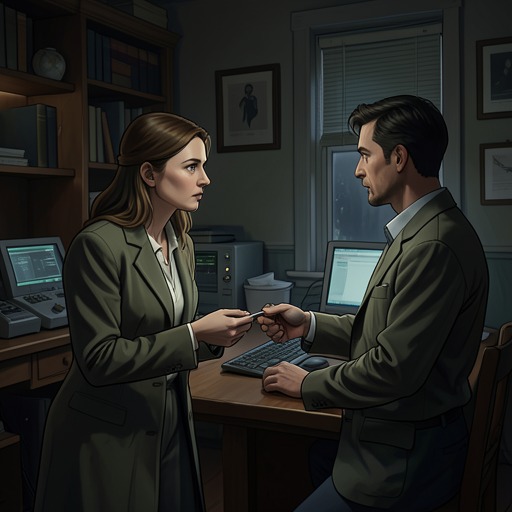
I don’t do anything. I do what I can.
Even If This Love Disappears From the World Tonight“I don’t do anything. I do what I can.” is Tooru Kamiya’s concise account of care: not a promise to accomplish the impossible, but a willingness to make an extra effort where choice and ability meet. The phrase gives shape to the novel’s contrast between love as an uncontrollable feeling and care as a series of limited, concrete actions. It also resonates beyond Tooru, illuminating Izumi Wataya’s freely chosen support for Maori Hino and the help that sustains Maori through school and into art.
Meaning and Immediate Context
The expression emerges when Izumi reflects on whether loving someone means doing anything for them. She admits that she does not understand such total devotion, and Tooru answers, “I don’t do anything. I do what I can.” The distinction is modest but decisive: care does not make a person omnipotent, and commitment is not measured by an impossible standard of sacrifice.
Izumi presses the point against what she sees in Tooru. He appears to be pushing himself hard for someone who is supposedly only doing what he can. Looking toward the twilight sky, he explains that he does not attempt what is impossible; he is glad to do something when it is within reach with a little extra effort, or when it is something he wants to do. His wording reframes effort not as a debt love imposes, but as an action that can be chosen willingly.
Tooru’s Care for Maori
Tooru connects this ethic to the change Maori has brought about in his life. Before meeting her, he thought he understood life and avoided doing anything foolish or daring. He recalls that he probably did not believe in himself and had felt self-conscious about being very thin, despite not being sickly. His days with Maori alter that settled view: he enjoys them, finds that she surprises him and makes him see things differently, and wants to become a better person.
That change does not turn his care into a claim that he can solve every problem. Instead, Tooru says that if he can do something for Maori with a little extra effort, he wants to do it. His declaration that he is content to remain her fake boyfriend so long as he can keep spending time with her makes the same boundary intimate and specific. He would rather continue being near her than burden her with the full force of his feelings; affection becomes a reason to stay present, not a demand that she answer him in kind.
Izumi understands that Tooru is not the only person acting from care. When he asks whether she helps Maori because she cares about her too, Izumi admits that part of her interest comes from finding Maori’s unusual situation compelling. She calls that motive selfish, then recognizes that it does not tell the whole story: she cares deeply, even while feeling powerless to do anything for Maori. Tooru’s answer leaves room for mixed motives without reducing care to either pure selflessness or mere curiosity.
A Shared Ethic of Support
Earlier, Maori apologizes to Izumi for dragging her into the difficulties caused by her memory loss. Izumi rejects the premise of that apology: if Maori means the amnesia, she need not worry, because Izumi does only what she can and what she wants to do. The wording closely echoes Tooru’s maxim, but its emphasis on choice is especially clear. Izumi is not presenting herself as an unwillingly burdened caretaker; she has decided that helping Maori is something she wants to do.
The narrator observes that Izumi is not easy to befriend, but becomes exceptionally kind once she has let someone into her world. In this context, the expression describes a relationship with limits and trust rather than an abstract rule about goodness. Izumi can acknowledge the demands of Maori’s condition without treating her friendship as an obligation imposed from outside. Her help remains meaningful precisely because it is chosen.
The same ethic appears in the account of Maori’s life after her accident. Each morning she reads the notes and journal on her laptop to learn, for that day, about her circumstances and what has happened since the accident. Through those entries she comes to understand that her parents and Izumi’s devotion and self-sacrifice enabled her to graduate from high school and attend art class a few times a week, a pursuit she had abandoned before the accident. The support is extensive, but the account names its particular outcomes instead of implying that care can erase the condition.
Maori cannot retain memories made up of information, yet she appears to preserve procedural memories rooted in physical sensation. She uses that capacity to develop as an artist; after graduating, she spends most of each day drawing and sometimes spends time with Izumi. The day before her amnesia ends, she draws for much of the day, able to make the lines she wants and instinctively capture the forms of people and objects. That work brings her a new happiness and moves her. The passage’s emphasis on repeated practice and specific support makes care visible in what Maori can continue to do, not in a claim that others can do everything for her.
Limits, Choice, and Consequence
The expression’s restraint matters most when care cannot guarantee a painless outcome. After Tooru’s death, Izumi and Keiko Nishikawa discuss his request that Tooru be erased from Maori’s journal. Keiko refuses to decide for Izumi whether that choice is right or wrong. Maori might suffer if Tooru remains in the journal; Izumi might suffer if she erases him and later wishes she had followed another course. Either choice could leave someone carrying pain or guilt, and the outcome is uncertain.
Keiko nevertheless tells Izumi that Tooru entrusted the decision to her and that the basis should be whether she wants to act. Keiko says she will follow Izumi’s decision and offers her own wish to fulfill Tooru’s last request as a possible reason if Izumi cannot choose alone. This is not an assurance that the right action will spare everyone; it is an acknowledgment that the decision belongs to the person who must make it, with another person willing to stand beside her.
Izumi leaves without deciding and goes to Maori’s home. Seeing Maori lying in bed, she imagines the next morning: Maori will wake, learn again that she has amnesia, and confront the knowledge that she had a boyfriend who died, with only her journal preserving the happier days. The scene places the maxim’s boundary against an unusually heavy responsibility. No amount of devotion can make the choice easy or guarantee what Maori will feel; what remains possible is to choose, to help, and to accept that the consequences may not be fully knowable.
Narrative Significance
As an expression, Tooru’s line is both an explanation of his conduct and a corrective to the idea that love must prove itself through limitless action. Its two clauses balance one another: the first refuses impossible power, while the second affirms effort, desire, and responsibility within actual limits. The novel tests that balance in several relationships, from Tooru’s wish to remain beside Maori to Izumi’s practical support and her later burden of deciding what to do with Tooru’s request.
The phrase does not make those situations equivalent. Tooru’s choice to spend time with Maori, Izumi’s acceptance of helping her friend, the parents’ and Izumi’s support of Maori’s education and art, and the decision over the journal all carry different stakes. Their connection lies in a shared refusal to confuse care with control over outcomes. The words therefore retain their force when no available action can restore what has been lost: doing what one can is neither doing everything nor doing nothing.